Sustainability Partners Deliver MotoEV Trams to HNL
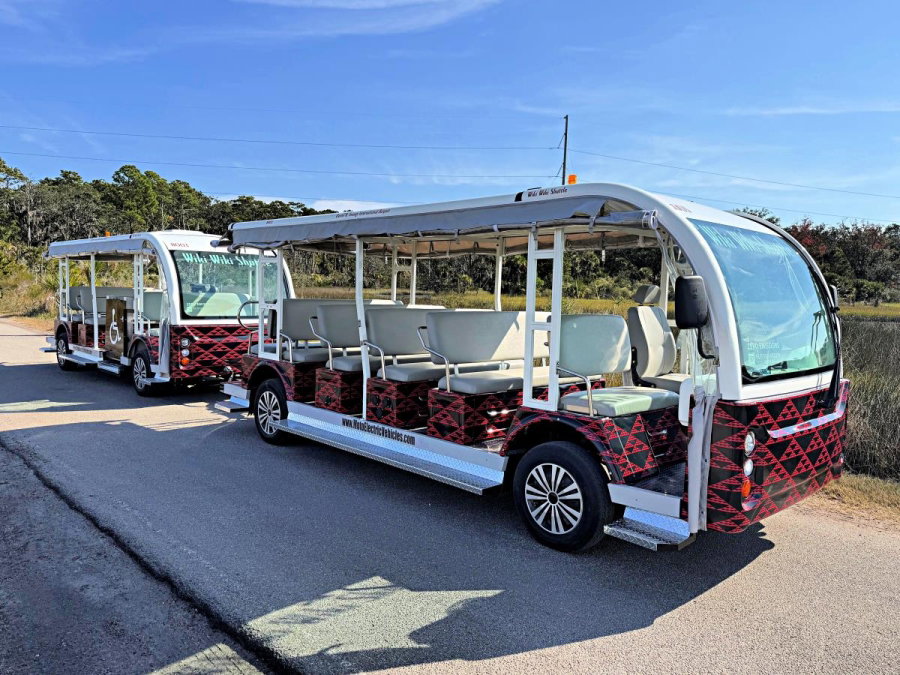
Wiki Wiki Shuttle service at the Daniel K. Inouye International Airport (HNL) in Honolulu added three electric airport trams with extended capacity trailers through Hawaii’s statewide Fleet Electrification contract with Sustainability Partners.
The Moto Electric trams will be used for the airport’s free intra-airport shuttle service that moves passengers between terminals and concourses at HNL. These new HNL electric shuttles will target the airport’s on-site passenger movement and advance Hawaii’s transition to lower-emission ground transportation for transporting domestic travelers.
Electric Wiki Wiki Shuttle trams will play a major role in transporting travelers between gates and terminals to augment the airport’s free bus service. The MotoEV Electro Transit Buddy shuttles with extended ADA trailers were put into operation mid-month and will service the same routes as the Wiki Wiki buses between gates C and G and Terminals 1 and 2. Airport trams will operate daily from 10 a.m. until 6 p.m., and travelers can board with carry-on bags. Extended tram trailers provide disability loading ramps to accommodate wheelchair passengers.
According to the HDOT director, the placement of the new HNL shuttles will reduce the noise and odor associated with traditional gasoline-powered buses to both improve a tram passenger’s overall airport experience while reducing the airport’s environmental footprint. Each MotoEV tram was assembled in the United States with American-made components, including GPS, cameras, and technology-ready monitoring capabilities. By combining delivery, vehicle charging coordination, and ongoing support through Sustainability Partners, officials believe it will help agencies scale electrification initiatives more efficiently.
Hawaii Electrification Made Simple Statewide
As part of the state’s goals, the Hawaii Department of Transportation established an initiative aimed at converting the state’s light-duty fleets to electric vehicles by 2028. This was done as a part of the state’s goal to reduce fossil fuel consumption for its ground transportation. Recently, the DOT signed a 10-year service contract with Sustainability Partners, LLC. This was a simple first step to allow all state and county agencies to procure electric vehicles and charging infrastructure through the company’s Electric Vehicles as a Service™ (EVaaS) contract.
To reduce the complexity of services provided, a monthly usage fee charged by Sustainability Partners is based on a month-to-month agreement similar to that used by a utility. By combining vehicle delivery, charging coordination, and providing ongoing support through the EVaaS, Sustainability Partners provided a convenient management solution that fully supported the state of Hawaii’s transition to lower-emission electric transportation by assisting agencies with ongoing fleet electrification efforts.
“We were excited about the opportunity to work with Sustainability Partners to help the State of Hawaii meet their unique needs at Daniel K. Inouye International Airport for safely and securely moving passengers with personalized electric-powered trams,” says Brett Jackrel, sales manager of Moto Electric Vehicles. “Sustainability Partners is a public benefit company designed to handle the details and hassles related to funding and deployment to meet the Honolulu airport’s needs for procurement, installation, and ongoing maintenance of electric vehicles without the common upfront costs.”
Why Electric Vehicles as a Service™ Matters?
With the placement of three MotoEV trams, Wiki Wiki Shuttle can accommodate approximately 40 travelers per vehicle with an ADA-equipped trailer to carry wheelchair passengers to and from airport facilities. The EVaaS model created by Sustainability Partners Matter enables the airport shuttle service to upgrade their fleet with electric people movers and the necessary charging infrastructure without upfront cost. Moreover, the EVaaS contract reduces the cost of fleet maintenance and immediately lowers vehicle-produced emissions.
Best of all, with a host of creative turnkey solutions, Sustainability Partners can quickly guide agencies through a quick and simple process that helps them identify the best fit for upgrading their fleet while meeting Hawaii’s Fleet Electrification goals. In fact, the EVaaS contract enables state agencies to electrify with no upfront capital, no long-term debt, and no solicitation process. That’s because electric vehicles and charging infrastructures are delivered as a service, with simple monthly usage fees based on mileage, which reduces operational costs.
The new Wiki Wiki Shuttle trams manufactured by Moto Electric Vehicles will transport domestic passengers between Honolulu Airport terminals and concourses as part of HNL’s free transportation service. These ADA-capable vehicles immediately lowered emissions and enhanced on-site passenger mobility while supporting Hawaii’s broader goals of lowering ground transportation emissions. Additionally, operating similarly to a utility, Sustainability Partners simply charges a monthly fee to help state agencies modernize their essential infrastructure and performance of transportation services.
MotoEV Electric Trams with Passenger Trailers
“Our electric trams with multi-passenger trailers can be properly equipped with ADA-approved ramps to accommodate mobility-impaired wheelchair travelers needing to freely move about in low-speed environments,” explains Jackrel. “For decades, transportation managers have been looking for quieter, cleaner ways of hauling people without them having to endure the odor and noise of smelly gas-powered buses. Today, we can deliver a custom-tailored, environmentally-friendly electric tram that passengers say they prefer when surveyed.”
Generally speaking, low-speed electric modes of transportation provide an option that’s more fun and more efficient at the same time. Plus, electric shuttle trams and extension trailers that those being used at the Honolulu airport also complement the provider’s identity messaging with customized branding signage. Many people today who use wheelchairs have varying levels of disabilities, but still need a chair for energy conservation or to manage chronic pain. MotoEV’s assistive accessories provide an increased sense of independence and comfort.
Electric people movers are a practical "greener way" for businesses, campuses, industrial sites, airports, and resorts to reduce their transportation-related carbon footprint. Incorporating MotoEV electric trams into a community fleet allows the agency to reduce its carbon footprint while also protecting passengers from health risks related to harmful air pollutants. In this way, fleets have the chance not only to help improve our planet today but to shape a cleaner future for generations to come.
________________________
Passengers traveling through the Daniel K. Inouye International Airport in Honolulu, especially those who are wheelchair bound, can experience a smoother, less disruptive ride with zero tailpipe emissions. As a bonus, the reduction in noise pollution helps airport operators more easily comply with local sound ordinances. Electrifying shuttle fleets provides one of the most direct and visible steps available for facility managers to strengthen public perception. Since Wiki Wiki Shuttle trams use off-peak charging, there is greater budget predictability as the per-mile energy costs can be lowered even further, and savings can add up quickly. With reduced upfront costs and simpler infrastructure for charging, multi-passenger electric shuttles and trams offer a financially sound and sustainable choice. For more details regarding our excellent inventory of specific multi-passenger vehicles, browse the complete MotoEV inventory of electric low-speed vehicles by vehicle type or industry application that meets your unique needs. Contact Brett Jackrel, Sales Manager of MotoEV, to learn more about our electric people movers and to discuss your facility’s exact transportation needs.

