Sabino Canyon Crawler Adds Electric Shuttles
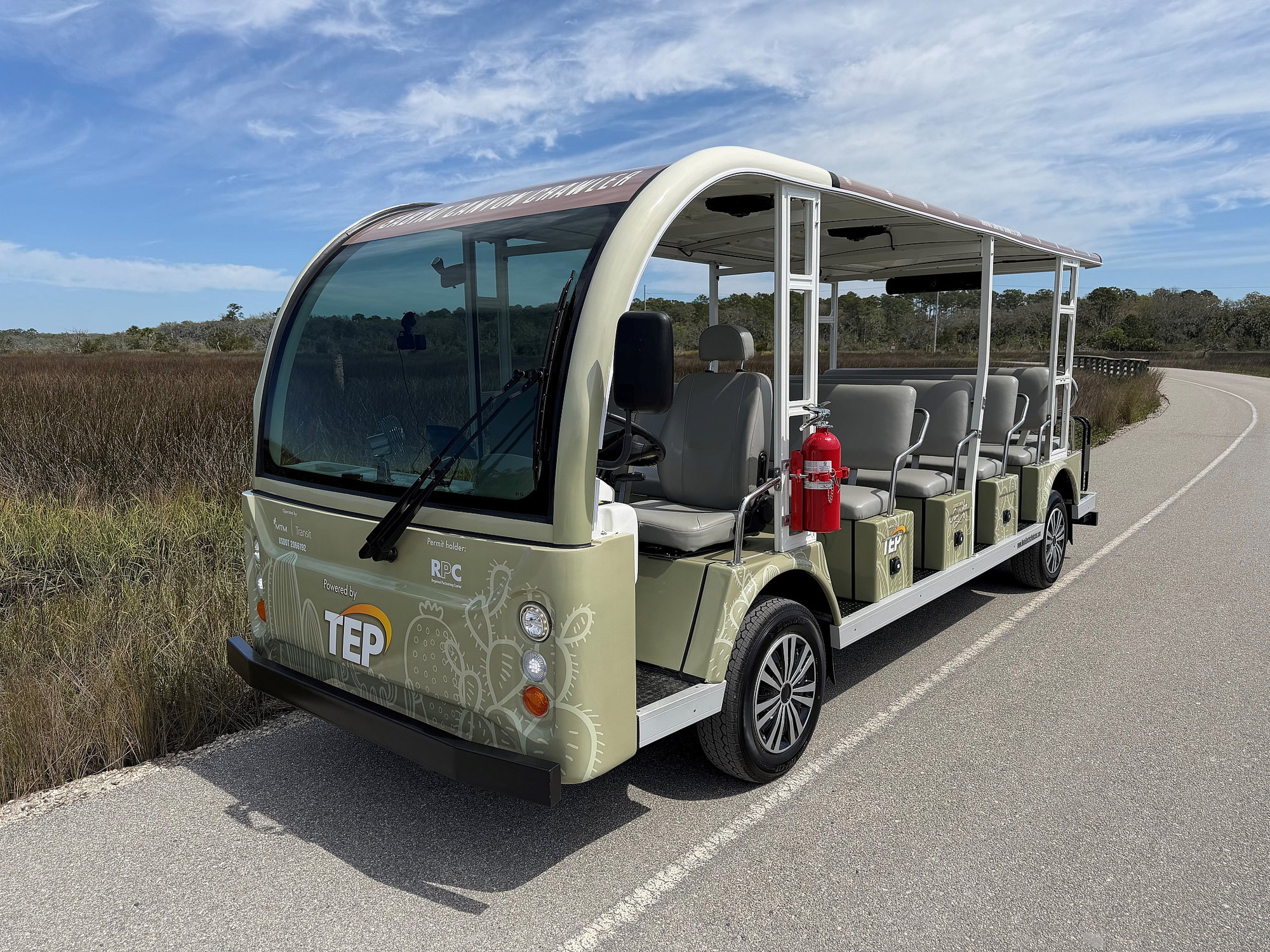
Sabino Canyon Crawler replaced older propane trams in 2019 to provide emission-free, open-air shuttle service through Tucson Arizona’s Sabino Canyon Recreation Area. The Sabino Canyon Crawler electric shuttles offer a smooth and eco-friendly way to explore the canyon while enjoying scenic desert landscapes. The roughly one-hour round trip transports park guests from the Visitor Center through the canyon with hop-on and hop-off stops along the paved route. Hikers, explorers and nature spectators can purchase tickets online or on-site at a kiosk to get to where they want to go and then catch a later tram.
Passengers have praised the electric vehicles as being quiet for better nature viewing of spectacular mountain views and wildlife hidden amongst the saguaro cactus. The Bear Canyon trams provide visitors with convenient access to breathtaking canyon scenery and popular hiking areas throughout the recreation area. The 7.4 mile trip generally takes about an hour and is highly accessible for elderly visitors and those with limited mobility who want to experience the desert park. For those wanting to walk, Stop #9 is noted for its enchanting scenic beauty and Stop #8 is perfect for those seeking access to canyon creek vistas.
Open year-round, the Southern Arizona sun quickly turns winter snowfall into much needed water flowing through canyon creeks to quinch the thirst of wildlife, including gray fox, white-tailed deer, jackrabbit, coyote, bobcats, and even an occasional roadrunner. Plus, this enchanting desert landscape allow enthusiasts to enjoy unique encounters as it is home to javelina, desert tortoise, Gila monsters, zebra-tailed lizards, and rock formations that form towering canyon walls.
Is Sabino Canyon a highly visited area?
Since the late 1800s, Sabino Canyon has attracted outdoor enthusiasts who cut the original trails that provided great opportunities for witnessing the natural beauty of the Santa Catalina mountain range nestled in the uniqueness of Southern Arizona’s Sonoran Desert. They are one of the mountain ranges in the state that constitute the Madrean Sky Islands within the Coronado National Forest. Today, the recreational area is a premier destination for over one million annual visitors and is the most visited area in the national forest with over 30 miles of trails for hiking, swimming, and wildlife viewing. Five days each week, excluding Wednesdays and Saturdays, visitors can enjoy one-of-a-kind cycling adventures using Sabino Canyon’s tram roads. During warmer days, visitors can reach canyon’s waterpark on the backside of the Sabino Canyon Dam with about a 2-mile hike from the visitor’s center by following the Bear Canyon Trailhead that heads toward the lake area or taking the Sabino Canyon shuttle to Stop #2 for an easier hike.
MotoEV Shuttles Added for Bear Canyon Route
Starting May 1, 2026, visitors to the mesmerizing Catalina Canyon recreation area will have a new way to explore popular outdoor destinations along the Bear Canyon trailhead with an emission-free, narrated ride that provides the history, geology and biology of this unique area of the park. These additions highlight the growing use of modern electric shuttle vans in eco-tourism destinations to improve sustainability and passenger experience. Even after the Sabino Crawler fossil-fuel trams were replaced with 48-seat electric shuttles, a gas-powered fleet of 14-passenger equipped units with wheelchair or ambulatory passenger access remained.
Tucson Electric Power (TEP) helped to fund both the addition of four 23-passenger electric shuttles with emission-free trips to Bear Canyon Overlook and the Seven Falls Trailhead. Officials say the priced new fleet depended upon TEP’s $2.5 million investment to help fund the trams as well as the needed infrastructure upgrades. Hourly departures on the Bear Canyon route will run from 9:15 a.m. to 4:15 p.m., while the Sabino Canyon route will continue hourly service from 9 a.m. to 4 p.m.
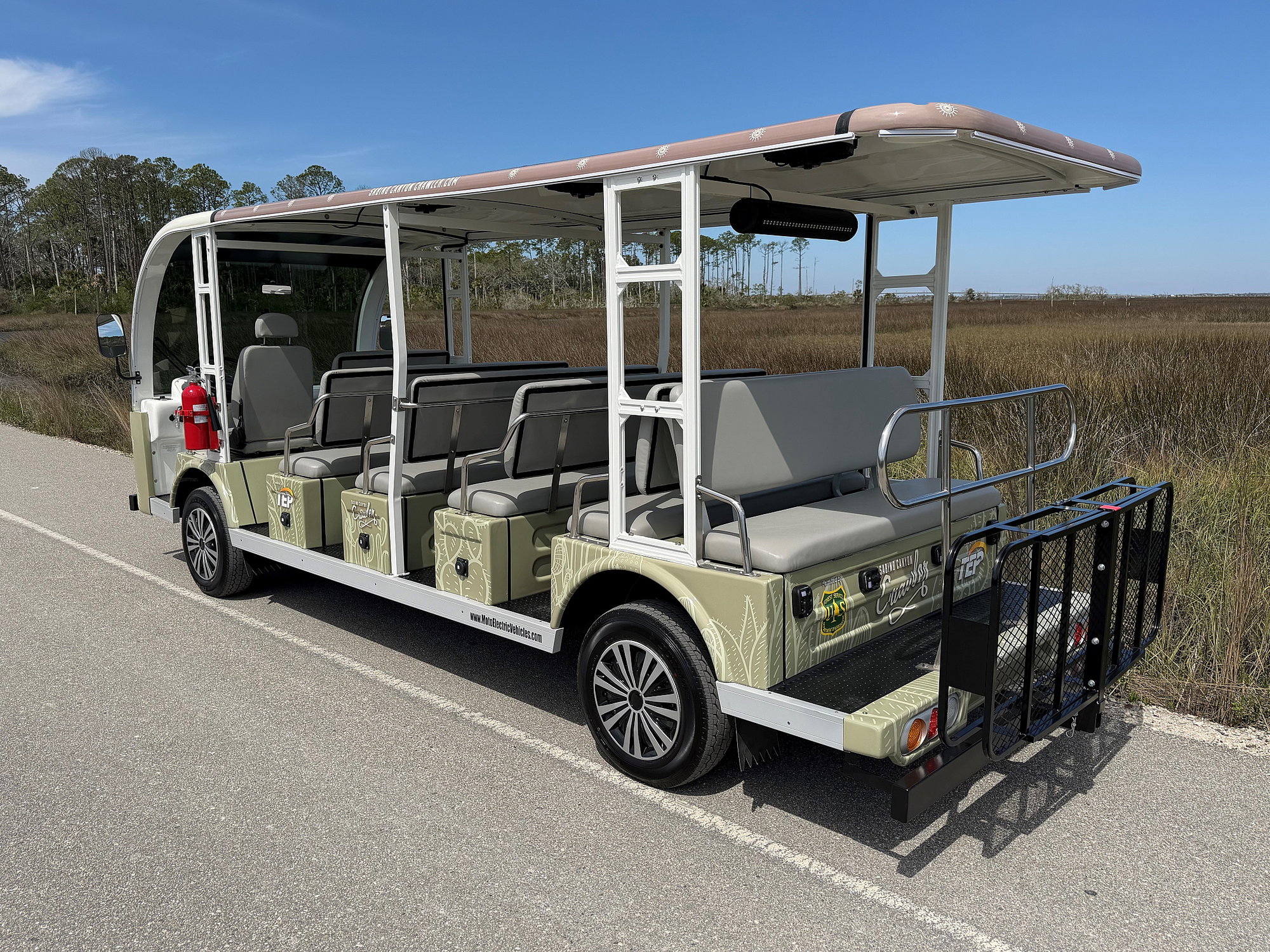
If you are looking for breathtaking waterfall views, take the Bear Canyon shuttle to the Seven Falls trailhead. Aboard a Bear Canyon electric shuttle, you will surrounded by the Sonoran Desert’s highly unique saguaro cactus, diverse desert fauna, and seasonal wildflowers. With a deeper venture into the trials, visitors are greeted by a series of waterfalls cascading down rocky cliffs that have attracted hikers, waders, picnickers, and swimmers for over a hundred years with unique swimming holes below.
History of Arizona Territory’s Sabino Canyon
Under the administration of the U.S. Forest Service in 1905, there was a shift toward creating a multiple-use park to preserve the beauty of Sabino Canyon’s natural landscape. Even then, the highly-diverse Sonoran Desert was the only place where the giant saguaro cactus grows in the wild. But, a dozen years before President William Howard Taft declared Arizona to be the 48th state, University of Arizona students and locals used the area to fish, picnic and ride horses.
During the Great Depression, the government used work agencies to build Sabino Dam with nine stone bridges crossing Sabino Creek in an attempt to reach the highest point in the Santa Catalina Mountains (Mount Lemmon). Although this early road failed, it is a 4.3 mile loop through the canyon that’s cherished today by tram riders for its traverse mix of architectural waterflow, making this trailhead a key part of the park experience.
The U.S. Forest Service closed the Sabino Canyon road to vehicle traffic, but not horses, in 1978 and began a gasoline-powered tram service for visitors. Due to lack of federal funding, the Friends of Sabino Canyon was founded in 1993 as a non-profit organization to raise additional money for park projects. By 2019, an all-new electric tram service replaced the less environmental-friendly gas and diesel trams for the Sabino Canyon Trailhead to protect this fragile ecosystem.
Although no historical records exist that document as to when canyon areas were stocked with trout streams, locals say it was long before the Bighorn Fire that endangered and threatened native fish habitats like the Gila Chub. Whereas fishing Sabino Creek is now prohibited to protect native fish populations, the trout fishing that was popularized in the 1950s can still be had on Rose Canyon Lake as well as in streams on Mount Lemmon. But, most areas managed by the Coronado National Forest today focus on swimming, hiking, and wildlife viewing, particularly in the canyon's watershed areas.
_______________________
The four new 23-passenger Moto Electric Vehicles will immediately help the Sabino Canyon Crawler to expand its transport services while continuing to reduce noise and pollution throughout the canyon. Most importantly, the Bear Canyon shuttles were equipped with 72V lithium batteries that can operate all day on a single charge. Although the canyon itself has been closed to private vehicles since 1978, travel has never been easier aboard today’s emission-free, open air Sabino Canyon Crawler or Bear Canyon MotoEV electric shuttles. For more details regarding our excellent inventory of specific multi-passenger vehicles, browse the complete MotoEV inventory of electric low-speed vehicles by vehicle type or industry application that meets your unique needs. Contact Brett Jackrel, Sales Manager of MotoEV, to learn more about our electric people movers and to discuss your facility’s exact transportation needs.

